Disabled Person's Trust: A Guide for Parents
If your child has a disability or special needs, that means they will always need help with money. Writing your will raises a question most parents find hard to sit with: what happens to them when we are gone? You want to leave them something. You also know that the wrong kind of gift could cost them the benefits and care funding they rely on.
A disabled person's trust is the usual answer. A disabled person's trust is a trust in which people you choose (trustees) hold money or property for your disabled child and use it for their benefit. Because your child does not own the money, it does not normally count as their savings for means-tested benefits, and the trust gets favourable tax treatment. This guide explains how it works, who qualifies and how to set one up in your will.
This guide is for parents in England and Wales. The key points:
• Leaving money directly to a disabled child can reduce or stop means-tested benefits such as Universal Credit, and council funding for care.
• If you die without a will, an adult child inherits their share outright, with the same risk.
• A disabled person's trust (also called a vulnerable person's trust) lets trustees you choose look after the money for your child.
• Your child qualifies if they are entitled to certain disability benefits, or cannot manage their affairs because of a mental disorder.
• The trust must be in your will. Fixing it after your death is difficult, and sometimes not possible.
In this guide
• What is a disabled person's trust?
• Why not just leave the money to your child?
• Who qualifies for a disabled person's trust?
• Does a disabled person's trust affect means-tested benefits?
• Disabled person's trust or discretionary trust: which is right?
• How a disabled person's trust works in your will
• Can a trust be set up after a parent dies?
• How is a disabled person's trust taxed?
• Does the trust need to be registered with HMRC?
• How to set up a disabled person's trust in your will
• How much does a disabled person's trust cost?
What is a disabled person's trust?
A trust is a legal arrangement where one group of people (the trustees) looks after money or property for someone else (the beneficiary). A disabled person's trust is a trust set up for a disabled beneficiary that meets special tax rules. You may also see it called a vulnerable person's trust, a trust for a disabled person, or, in American guides, a special needs trust.
Parents can set one up during their lifetime or in their will. Most parents use their will, because that is when the money passes. Your trustees then decide when and how to use the money for your child: a holiday, a specialist bed, driving lessons for a carer, help with a home. Your child can ask for things, but they cannot demand the money. That is what keeps it safe.
The tax rules are set out in section 89 of the Inheritance Tax Act 1984 and GOV.UK's guide to trusts for vulnerable people. During your child's lifetime, the trust must be used for them. Trustees can use a small amount each year for other people: up to £3,000, or 3% of the trust fund if that is lower.
Why not just leave the money to your child?
Leaving money directly to a disabled child can cause two problems. The money counts as their savings, which can reduce or stop means-tested benefits and council funding for care. And if your child cannot manage money, someone may have to apply to the Court of Protection before anyone can use it for them.
Scope, the disability charity, warns that giving money directly to a disabled person could affect their means-tested benefits or social care.
Universal Credit
Universal Credit is means-tested, which means the amount depends on income and savings. If your child has savings over £16,000, they cannot get it. Savings between £6,000 and £16,000 reduce it: each £250 over £6,000 is treated as £4.35 of income a month. An inheritance of £20,000 left directly to your child would stop their Universal Credit for as long as their savings stay above £16,000.
Care and support from the council
Councils also means-test the cost of care, including care at home and supported living. In England, the council will not pay towards care for someone with capital over £23,250, and capital between £14,250 and £23,250 increases what they pay. Wales has different limits.
Who will manage the money?
If your child cannot make decisions about money, they cannot manage an inheritance themselves. Someone would usually need to apply to the Court of Protection to become their deputy, which takes time and costs money. Our guide to the Court of Protection explains what deputyship involves.
If there is no will
Without a will, the intestacy rules decide who inherits. Children inherit their share outright at 18, so an adult disabled child would receive their share directly, with all the problems above. Our guide to the intestacy rules explains who inherits when there is no will.
If you leave your child out altogether
Some parents think the safest thing is to leave their disabled child nothing and trust a brother or sister to look after them. That carries its own risks. The money then legally belongs to the sibling, and could be lost through their divorce, debts or death. A child of any age can also bring a claim against an estate under the Inheritance (Provision for Family and Dependants) Act 1975 if they were not reasonably provided for. In Ilott v The Blue Cross, the Supreme Court looked at how an award would affect the claimant's benefits, and noted that, without a discretionary trust, part of the provision proposed for her could have been caught by the benefit capital rules. A trust in your will deals with both problems.
Who qualifies for a disabled person's trust?
Your child counts as a "disabled person" for a disabled person's trust if they are entitled to one of a list of disability benefits, or if a mental disorder within the meaning of the Mental Health Act 1983 means they cannot manage their property or affairs. For a trust in your will, this is tested when you die.
The benefits are listed in Schedule 1A to the Finance Act 2005. They include:
• Disability Living Allowance (DLA): the care component at the middle or highest rate, or the mobility component at the higher rate.
• Personal Independence Payment (PIP): either component.
• Attendance Allowance.
• Constant Attendance Allowance and Armed Forces Independence Payment.
• The Scottish equivalents, such as Child Disability Payment and Adult Disability Payment, at the qualifying rates.
A few points that matter to parents:
• Children qualify too. A child under 16 receiving DLA at a qualifying rate counts, as there is no minimum age.
• Being entitled is enough. GOV.UK confirms that your child only needs to be eligible for the benefit, even if they do not receive it. Someone who would get it but for being in a care home or hospital can also qualify.
• The test is about the law, not a diagnosis. A diagnosis of autism or a learning disability does not qualify on its own. What counts is the benefit entitlement, or that a mental disorder means your child cannot manage their affairs. GOV.UK suggests checking the second test with a medical professional.
• Once it applies, it stays. HMRC's guidance says the special tax treatment can continue even if your child's disability later ends.
If your child does not qualify, an ordinary discretionary trust can still protect their benefits. It just does not get the same tax treatment. The table further down compares the two.
Does a disabled person's trust affect means-tested benefits?
Not if the trust is genuinely discretionary. Money held by trustees who decide whether and when to pay out is not treated as your child's savings for Universal Credit or for council care charging. What can count is money the trustees actually pay to your child.
The Department for Work and Pensions' guidance for decision makers explains why: with a discretionary trust, the trustees "cannot be made to make payments", so your child has no right to the money. The care and support statutory guidance says the same for council charging: capital held in a discretionary trust is not counted as the person's capital.
The protection depends on how the trust is written and run. Three things can undo it:
• A fixed right to the money. If the will gives your child the right to the trust income for life (a life interest) or a right to the capital, it can count for Universal Credit. There is no Universal Credit rule that ignores a life interest.
• Your child putting in their own money. A trust your child sets up with their own savings can be treated as deliberately getting rid of money to claim benefits (deprivation of capital).
• Regular cash payments. Money the trustees pay to your child counts when they receive it. Universal Credit counts income from a trust as income, and a lump sum adds to their savings.
So trustees usually pay for things directly, such as a holiday, equipment or repairs, rather than handing over cash. Scope's guide makes the same point, and suggests trustees check which benefits and care your child receives before paying out.
Some guides say a disabled person's trust always protects benefits. Others say it cannot. Both are partly right: a discretionary trust set up by parents in their will protects benefits, while a trust giving your child a fixed right to the money, or set up with their own money, may not.
Disabled person's trust or discretionary trust: which is right?
Both a disabled person's trust and an ordinary discretionary trust keep money out of your child's hands and protect means-tested benefits. A disabled person's trust has better tax treatment but must be used almost entirely for your disabled child. A discretionary trust can benefit a wider group, such as siblings, but pays more tax.
In an ordinary discretionary trust, the trustees choose between a group of beneficiaries you name. The table sets out the main differences.
| Disabled person's trust | Ordinary discretionary trust | Leaving money outright | |
|---|---|---|---|
| Who it is for | Your disabled child, who must qualify. Others up to £3,000 or 3% a year | A group you choose, such as your disabled child and their siblings | Your child owns it |
| Means-tested benefits | Protected if discretionary | Protected | Counts as your child's savings |
| Inheritance tax charges every 10 years | No | Can apply, and also when money leaves the trust | Not applicable |
| Income tax and capital gains tax | Trustees can elect to be taxed broadly as your child would be | Trust tax rates apply | Your child's own tax |
| When your child dies | Counts as part of your child's estate for inheritance tax, then passes as your will says | Does not count in your child's estate | Passes under your child's will or the intestacy rules |
An ordinary discretionary trust can suit a family with a larger estate, several children to provide for, or a child who does not meet the definition. A disabled person's trust usually suits a family whose money is mainly for the disabled child. Which is right depends on your estate and your family, and it is worth taking advice on.
How a disabled person's trust works in your will
Putting the trust in your will is often the simplest route, because it costs nothing to run until it takes effect. A few decisions shape it.
Both parents' wills
Many couples leave everything to each other first, with the trust taking effect when the second parent dies. Others put part of each estate into the trust on the first death. Either way, both wills should be written together so they work as a pair. If you are separated or divorced, each parent needs their own plan. Our page on writing a will covers the basics.
Choosing trustees
Your trustees make every decision about the money, so this is the most important choice you make. Scope suggests between two and four trustees, and a professional trust corporation can act alone. Good trustees know your child, understand what matters for their quality of life, and will work well together. Many parents choose a mix of family members of different ages, so the trust does not depend on people who are getting older themselves.
A letter of wishes
A letter of wishes sits alongside your will and tells your trustees, in your own words, about your child: their routines, what makes them happy, what you would like the money used for, and who they trust. It is not legally binding, but it is the closest your trustees will have to your voice. This is something that we offer and would recommend in such scenarios in particular.
What happens after your child dies
You decide in your will who receives what is left in the trust when your child dies, for example their brothers and sisters. For inheritance tax, the trust fund is treated as part of your child's estate at that point.
Pensions and life insurance
A will does not usually control pension death benefits or life insurance paid out on your death. Scope's guide explains that a trust set up separately from your will, during your lifetime, can be used for these. A lifetime trust also lets both parents pay into a single trust for your child. If this applies to you, review your pension nomination forms and life policies at the same time as your wills.
The trust and your child's day-to-day money
A trust only looks after the money in it. Your child's own benefits and bank account still need managing. For benefits, someone can apply to the DWP to become their appointee. For wider decisions about money, a deputy may be needed once your child is an adult. Our guide to deputyship orders for a disabled child turning 18 explains when a deputy is needed.
Can a trust be set up after a parent dies?
Sometimes, but it is much harder. An inheritance left outright can be redirected into a trust with a deed of variation within two years of the death. If your child cannot make that decision themselves, it needs the Court of Protection's permission, and the result is not certain.
Where your child lacks capacity, a deputy would have to apply to the court on their behalf, and the court does not always agree. In Re LMS it did; in F v R it refused. Even where it works, the DWP or the council may treat the trust as your child deliberately giving away their money.
Putting the trust in your will avoids all of this.
How is a disabled person's trust taxed?
A disabled person's trust does not reduce the inheritance tax due when you die. Its tax advantages come afterwards: no inheritance tax charges every 10 years, and income tax and capital gains tax broadly based on your child's own position rather than the higher trust rates.
Inheritance tax on your death
Your estate is taxed in the normal way. Inheritance tax is charged at 40% on the part of an estate above the £325,000 nil-rate band. An extra residence nil-rate band of up to £175,000 can apply when your home passes to your children. Both are fixed until April 2031. Our inheritance tax guide explains the wider rules.
Inside the trust
• No 10-year charges. Ordinary discretionary trusts pay inheritance tax every 10 years and when money leaves them. GOV.UK confirms that trusts for vulnerable beneficiaries are exempt.
• The vulnerable person election. The trustees and your child, or someone legally entitled to act for them, can make a joint election on form VPE1, so the trust's income and gains are taxed broadly as if they were your child's. The deadline is 12 months after the 31 January following the tax year it is to start from, and it cannot be undone.
• A higher capital gains tax allowance. Trustees of a disabled person's trust get £3,000 a year, twice the £1,500 for other trusts.
The election is becoming more valuable. In the Budget on 28 October 2026, the government announced that trust tax rates on savings and property income will rise to 49% from 2027 to 2028.
Does the trust need to be registered with HMRC?
Usually, yes. A trust created by a will does not need registering if it is closed within two years of the death. A disabled person's trust normally lasts for your child's lifetime, so the trustees will usually need to register it on the Trust Registration Service, within 90 days of the trust being created or becoming liable to tax. Banks and other regulated firms must check the register before they open an account for a trust that has to be registered.
How to set up a disabled person's trust in your will
1. Talk it through as a family. Agree what you want for your child, who else you want to provide for, and who you trust to manage the money.
2. Check whether your child qualifies. Look at which benefits they receive or are entitled to, and whether they can manage their own affairs.
3. Choose your trustees, and back-ups. Ask them first. Consider at least one younger trustee.
4. Decide what goes into the trust. This could be a share of your estate, a fixed sum or your home.
5. Decide who benefits after your child. Usually siblings, other family or a charity.
6. Write your letter of wishes. Your trustees will rely on it for years.
7. Check your pensions and life insurance. Update nominations so they fit the plan.
8. Review it when life changes. A new benefit decision, a move into supported living, a divorce or the death of a trustee are all reasons to look again.
Charities such as Scope and Mencap publish free guides for families, and are a good place to start reading. The will itself should be drafted by a wills solicitor, because the wording decides whether the trust protects your child's benefits and gets the tax treatment.
How much does a disabled person's trust cost?
Our guide fees are £650 + VAT for mirror wills for a couple, and £3,500 + VAT for setting up a trust. We can also visit you at home for £450 + VAT, which some parents find easier than arranging care so they can travel. You can see our other fees on our fees page. A fixed fee is a guide price, and the final fee depends on what your family needs.
Frequently asked questions
What are the disadvantages of a disabled person's trust?
Your child cannot spend the money freely; the trustees decide. Only up to £3,000 or 3% a year can be used for anyone else during your child's life. The trust may need registering and tax returns. And the trust fund counts as part of your child's estate for inheritance tax when they die. For many families, these are fair trade-offs for protecting benefits and care.
Is a vulnerable person's trust the same as a disabled person's trust?
Mostly, yes. "Vulnerable beneficiary" is the tax term, and it covers disabled people and children under 18 whose parent has died. A trust for a disabled person that meets the rules is often called either name.
Is a special needs trust the same thing?
A special needs trust is the American name. In England and Wales, the equivalent is a disabled person's trust or a discretionary trust.
Can I set up a disabled person's trust for myself?
The law does allow a disabled person, or someone with a condition expected to lead to disability, to put their own money into a trust for themselves. The rules are different, and putting your own money into a trust can be treated as deliberately reducing your savings to claim benefits. Take advice before doing this.
Does the trust need its own bank account?
Yes. The trustees open a bank account for the trust, so the trust money is kept separate from their own and from your child's. The bank may ask for proof that the trust is on the Trust Registration Service.
Does this apply in Scotland and Northern Ireland?
The tax rules apply across the UK. What this guide says about wills, intestacy and care charging covers England and Wales, with the care figures for England. Scotland and Northern Ireland have their own rules.
Talk it through with us
A disabled person's trust in your will lets you leave your child something without putting their benefits or care at risk, and puts the money in the hands of people you trust. It works only if it is written into your will before it is needed.
This guide is general information about the law in England and Wales. It is not advice on your family's situation, which will always depend on your child's needs, your estate and the wording of your wills.
If you would like to talk through how to provide for your child, call us on 020 8515 2790 for a free, no-obligation 20-minute chat, or send us an enquiry. You can also read more about our trusts service.
Author Bio:
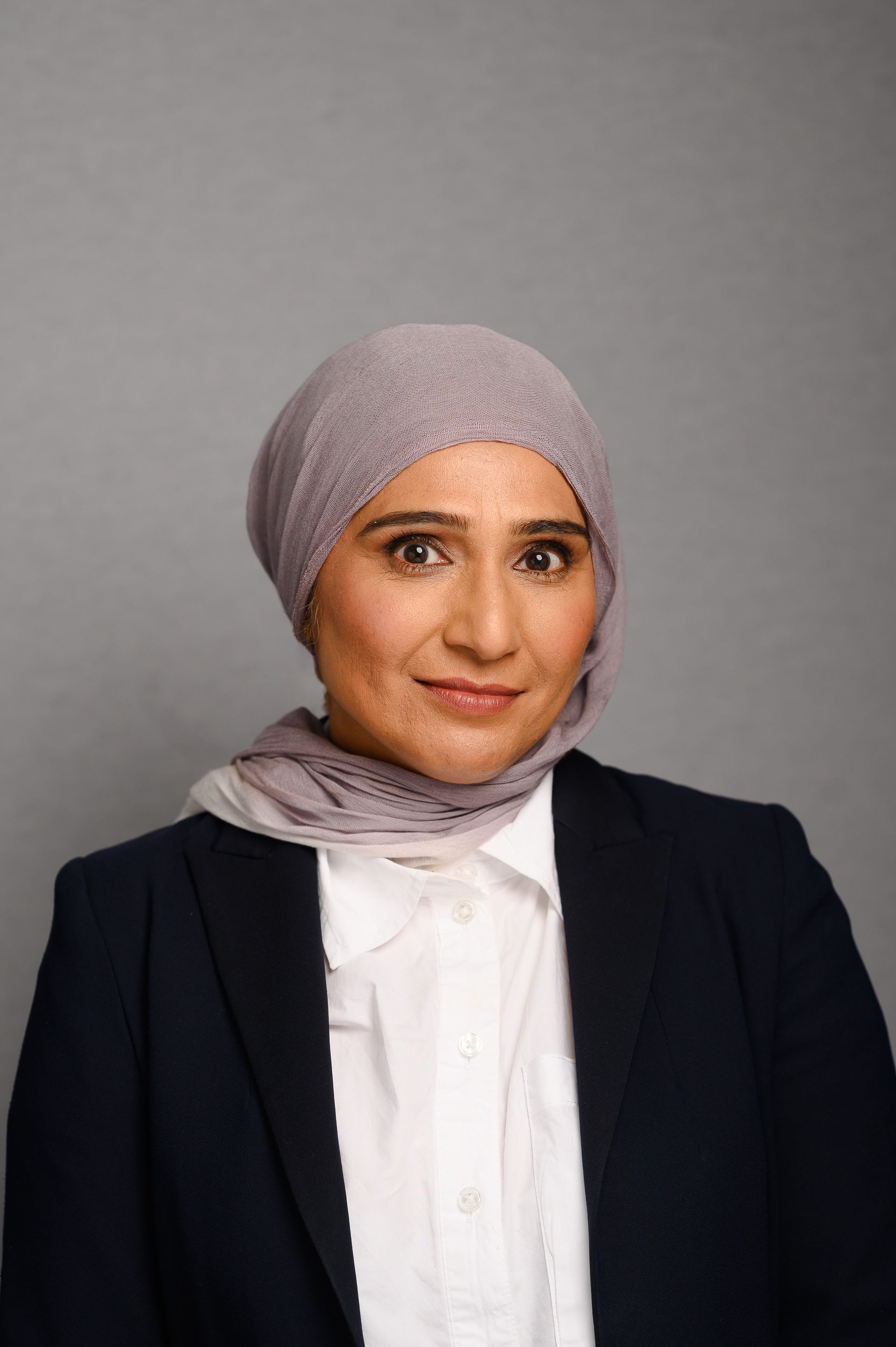
Nasreen Akhter is the founding director of Ash Hill Solicitors and a private client solicitor with over a decade of experience in probate, wills, estate planning and elderly client care. Known for her calm, compassionate approach, she guides individuals and families through life's most sensitive legal matters with clarity and care.
Nasreen is also an accredited civil and commercial mediator, and is listed on the Solicitors Regulation Authority (SRA) register. Outside of work, she's a dedicated mum and chairs Happy Orphans Worldwide, a charity supporting vulnerable children worldwide.